
- Website: a collection of interconnected, publicly accessible web pages sharing a single domain name, hosted on web servers, and accessed via the internet.
- Protocols: a standardized set of rules and formats governing how data is transmitted, received, and processed between web browsers (clients) and servers.
I. Web protocols:
– http (Hypertext Transfer Protocol): The foundation for data communication on the World Wide Web, used for loading web pages.
– https (HTTP Secure): An extension of HTTP that encrypts communication for secure transactions.
– FTP (File Transfer Protocol): Used for transferring files between a client and a server.
– DNS (Domain Name System): Translates domain names to IP addresses.
– IP (Internet Protocol): a numerical label—like 192.0.2.1—assigned to devices on a network to identify them and enable data communication.
II. Email protocol: sets of rules (SMTP, IMAP, POP3, TLS) that manage how electronic messages are sent, received, and stored between mail servers and clients
3. Domain Name: a human-readable address used to access websites (e.g., google.com), translating complex numerical IP addresses into memorable words. It acts as your unique identity on the internet, typically consisting of a name and an extension (TLD) registered through providers like Namecheap, Godaddy… Ex: www.google.com www.bandith.info www.us.gov www.trc.gov.kh www.tvb.com.hk
More on: https://blog.netim.com/en/domain-names/choose-domain-extension-industry-14804/
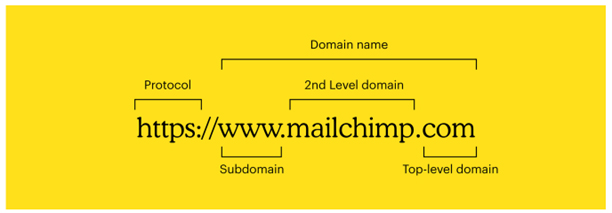
4. Hosting Server: a powerful, secure computer or virtual machine that stores website files—including HTML, images, and databases—and delivers them to users’ browsers when they visit a domain
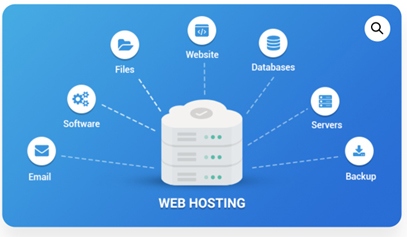
5. Web Languages: a specialized coding system (programming or markup) used to develop, structure, style, and add functionality to websites and web applications. These languages facilitate communication between users, browsers, and servers, enabling dynamic content and interact languages.
- Front-end: HTML, CSS, JavaScript (user-facing)
- Back-end: Python, PHP, Ruby, Java (server/database interaction)
6. CMS (Content Management System): is software that allows users to create, manage, and modify website content without needing specialized technical knowledge or coding skills. It provides a user-friendly interface for publishing text, images, and videos, acting as a centralized hub for digital content, commonly used for websites, blogs, and portfolios. There are between 250-350 CMS. Popular CMS: WordPress (40%), WIX, Shopify, Joomla, Drupal, Ghosts, phpWiKi,…
More on: https://en.wikipedia.org/wiki/List_of_content_management_systems
